



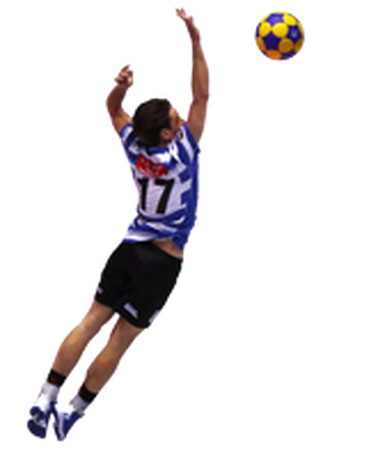
Korfballexercises for u7
Formation
- Form two groups. The attacker receives a bib.
- The attacker starts with one defender.
- Within a playing area, the attacker must try to get free.
- At the front of the playing area stands the feeder, who must ensure the ball reaches the attacker well.
- The remaining players stand along the side.
- If the attacker receives the ball successfully without the defender intercepting it, an additional defender joins.
- Get free
- Throwing
- Avoid contact
Execution
- All players stand in a circle.
- Player A throws the ball to player B and runs to player B's position.
- Player B throws the ball to player C and moves to player C's position.
In Brief
- Shooting game where shots are taken from different sides of the korf.
- One pair per korf with a ball. If there are not enough korfs, two pairs with one ball each.
- Four markers per korf: front, back, left, and right at approximately 6 meters distance.
- One player starts under the korf, the other shoots from each marker.
- Switch roles after each round.
- Which pair completes the 'around the world' first?
- Distances can be increased or decreased.
- Make 2 goals at each marker.
- Shoot on the move or take dodge shots.
- With 2 pairs per korf, score 2 times together at each marker.
- Complete the task within 2 minutes, otherwise a penalty round.
- Shoot from different positions to get used to various angles and distances.
- Ensure variation in shooting positions to avoid favouring any team.
- Accurate shooting is crucial for success.
- Players become more focused and improve quickly.
In Brief
- A nice shooting exercise with a lot of running.
Organisation
- The korfs are placed in a circle.
- At each korf, there is a feeder with a ball.
- The rest of the players stand in the middle of the circle.
- Aim for 2 korfs per 5 players.
Execution
- Part a: The players in the center circle take running-in shots at one of the korfs. Those who are not fast enough must wait. Each player retrieves their own running-in shot and then looks for a free korf again.
- Part b: As in part a, but who scores 10 goals first?
- Part c: As in part b, but who scores a goal at each korf first?
- Part d: As in part b, but with overhead running-in shots.
- Part e: As in part b, but with a passing situation. The runner plays the ball back to the feeder who has moved away from the post. Who scores 5 goals first?
- Part f: As in part b, but the runner takes dodge shots. The feeder retrieves the shot and then tries to score themselves. Who scores 5 times first?
- Part g: As in part f, but after the dodging movement, no shot follows. The ball goes back to the feeder who shoots with a quarter/half turn.
Variation
- Add defenders. Which attacker scores 10 running-in shots or 5 goals from dodge shots first?
Starting Formation
- Two groups at the first two cones.
- The first in line runs to the hoop and goes through it from the bottom, so the hoop goes over their head.
- Then they move in a defensive stance to cone two and spin around it four times.
- Finally, they run to cone three and score before they can run back to cone one and tag the next person in line.
- Move backwards and bend through the knees with your arm raised.
- Hoop from cone 1: 5 meters.
- Cone 2 from hoop: 5 meters.
- Cone 3 from cone 2: 5 meters.
- Post from cone 3: 4 meters.
- One ball per pair/three.
- Players throw across until they reach a pole.
- At the pole, both players may shoot once.
- Then they must again throw over to another pole.
- All groups just go right through each other.
- Whichever two/three has 15 goals (optional) first.
- 3 groups at pawns
- Run to the hoop
- Through there, through to pawns
- walk across footbridge
- jumping over stick
- Finally shoot (2 attempts)
- Whoever scores 5 times first (collect pawns)
- One ball per pair/three.
- Players throw across until they reach a pole.
- At the pole, both players may shoot once.
- Then they must again throw over to another pole.
- All groups just go right through each other.
- Whichever two/three has 15 goals (optional) first.
The chaos game is fun for younger children, but can also be played with older ones.
- In the chaos game, the idea is for each child to have a ball, and 3 to 4 poles (also depending on the number of players)
- Line up in a row.
- Each player starts at the same pole,
- There is a countdown and then they all start shooting,
- If they score, they move up one pole,
- If they don't score, they stay at the post until they do.
- You can agree in advance whether they have to pass each pole 1, 2 or 3 times depending on the level.
- Variation: you can use pawns to mark a circle outside of which the players must shoot,
- They may enter it only to catch the ball.
- Materials below are for 4 people (hat = pawn)
- 1 person is the ticker
- The ticker is going to try to tickle as many people as possible, ticked? Then hold each other's hands until the pendulum is very long!
Red dots are the tickers. They are not allowed to let go of each other. The blue dots are the people who have yet to be tapped.

- Make pairs
- Place 3 pawns in a triangle, about 4 meters apart
- Players stand at pawns 1 and 3
- Player at pawn 1 has a ball
Progression:
- Player at pion 3 runs to pion 2 taps him and runs back.
- The player at pion 1 throws the ball before player 2 arrives at the pion, so that the ball is given in the run.
- When the ball arrives at player 2 then player 1 at pion 1 runs to pion 2 and the player at pion 1 runs to pion 2 and back.
- Gets the ball passed in the run when she/he arrives at pion 1 again.
- Then player 2 starts again.
More difficult:
Throwing with the other hand.
Variation:
Throwing with the other hand.
Variation:
- player 1 at pawn 1 and player 2 at pawn 3.
- player 1 runs to pawn 2 and player 2 throws the ball in the run to player 1.
- After throwing the ball, player 2 runs directly to pawn 1 and receives the ball in the run from player 1.
- Player 1 then runs towards the free pawn again and so on.
- When the trainer calls yes, the players turn the other way.
- Make sure they keep throwing with the outside hand.
- Put 3 pawns in a triangle, with about 4 meters apart
- At pawns 1 and 3, one person stands.
- The player at pawn 1 has the ball.
- The player at pion 3 runs to pion 2, taps it and runs back.
- The player at pawn 1 throws the ball to player 2 before he is back at the 3rd pawn.
- Thus the ball is given in the run.
- When the ball arrives at player 2, player 1 then runs to pawn 2 and back again in which he then gets the ball passed by player 2 in the run.